
Improving activation through system intelligence and faster time to value
nRev
AI
Activation
As a product design consultant, I redesigned onboarding for a GTM AI product to make the experience more context-aware, reduce ambiguity, and accelerate time to value.

Product Context
nRev is a GTM AI platform that helps teams build automated workflows for revenue operations such as lead enrichment, routing, and outreach.
While the product had strong capabilities, users struggled to get started. The challenge was not feature availability, but helping users understand what to build, how to start, and how quickly they could achieve value.
The Problem Statement
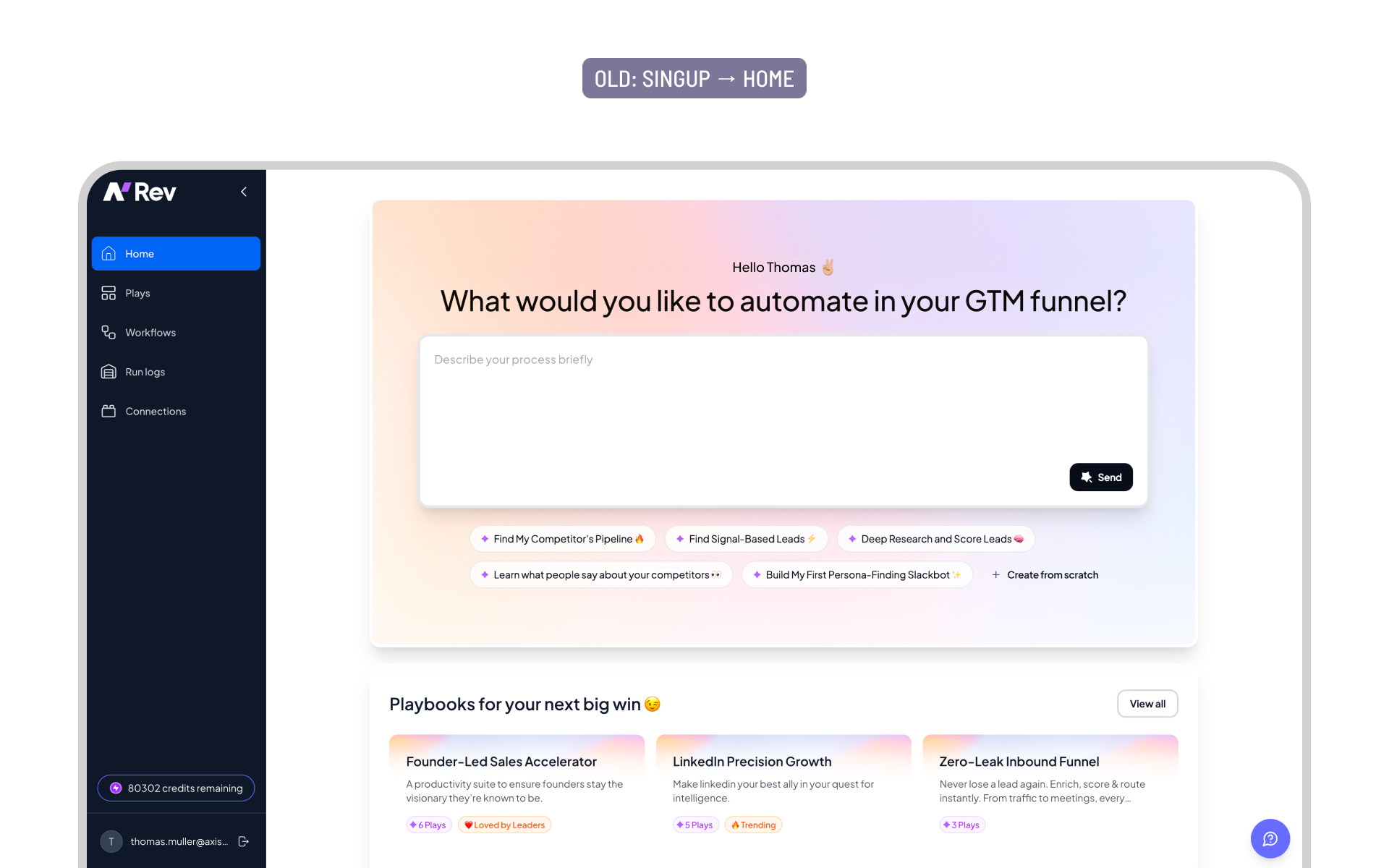
A large number of users dropped off immediately after signup.
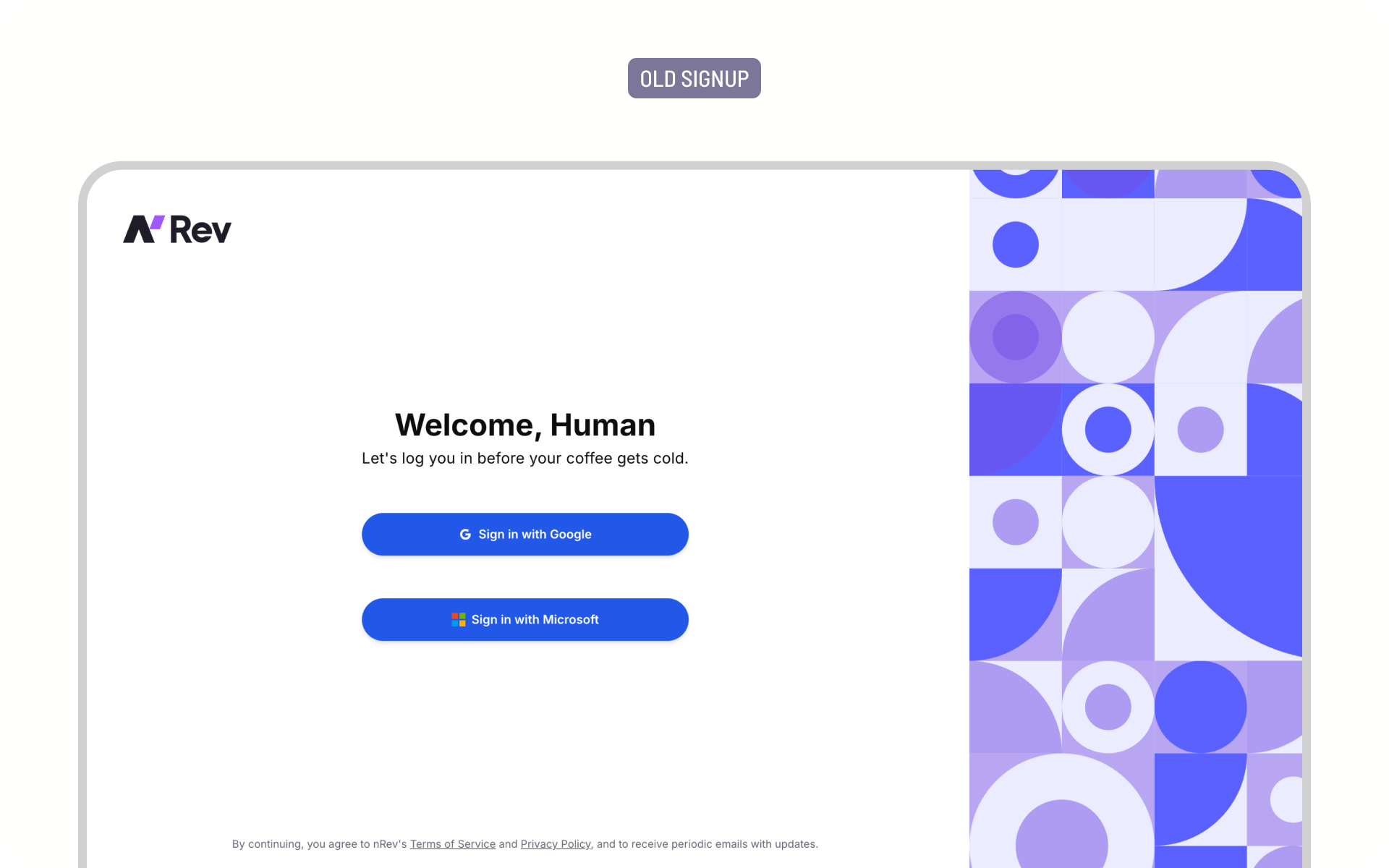
There was no onboarding experience. Users were redirected to a generic homepage without guidance, context, or a clear next step.
This directly impacted activation and product adoption.
- Users did not understand what to do
- Users did not create workflows
- Users did not reach their first meaningful outcome
Research Methods
Behavioral Analysis
We analyzed how users navigated post-signup and observed hesitation, drop-offs, and incomplete actions.
Qualitative Feedback
User conversations revealed confusion around use cases, starting points, and expected outcomes.
Competitive Analysis
We analyzed onboarding patterns across tools like Clay, Gumloop, n8n, String by Pipedream, and Apollo to understand how similar products guide users.
Findings
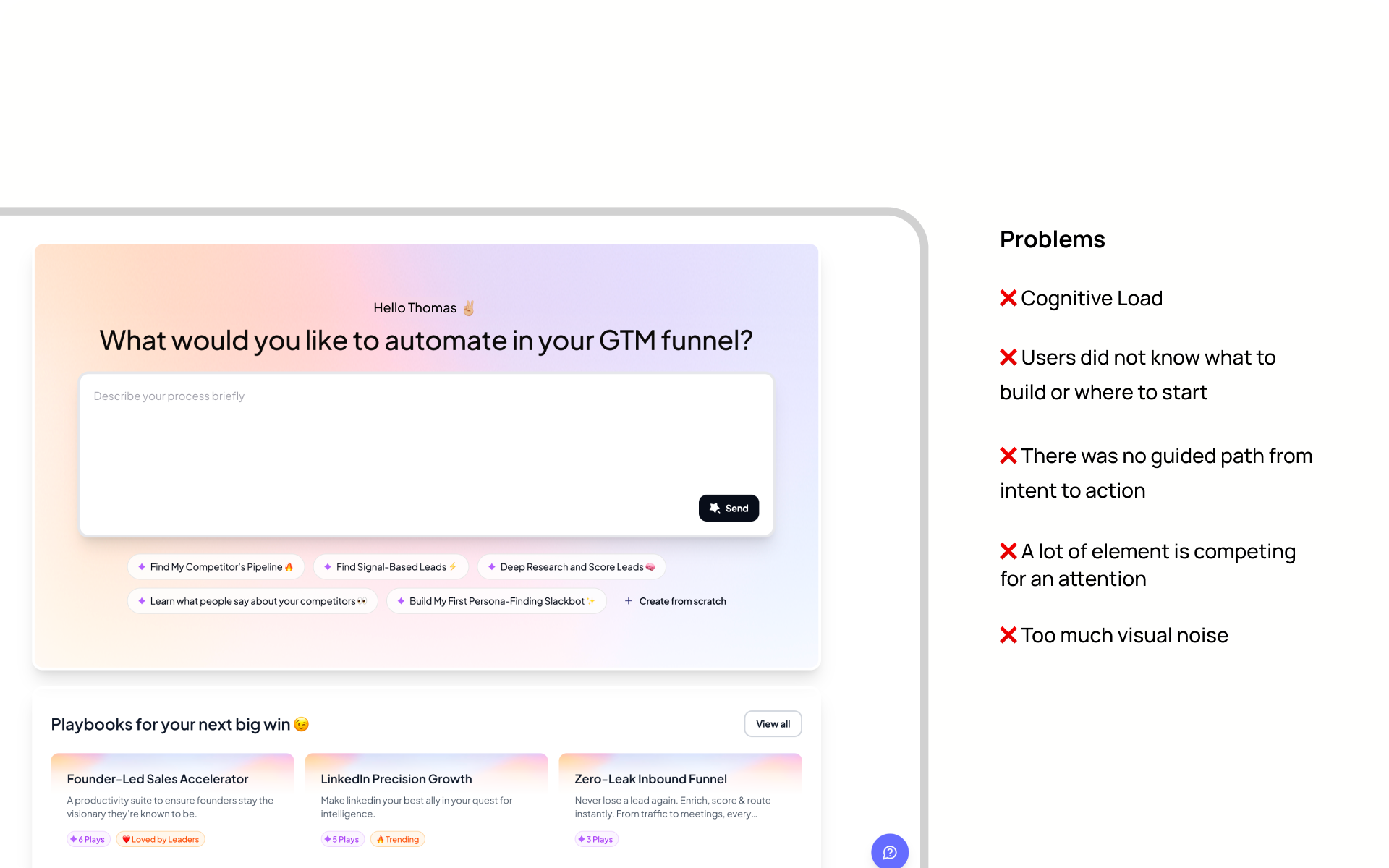
- Users were not dropping due to product capability, but due to lack of direction.
- Users did not know what to build or where to start
- The system expected high upfront thinking
- There was no guided path from intent to action
- No early proof of value was shown
Key Insight
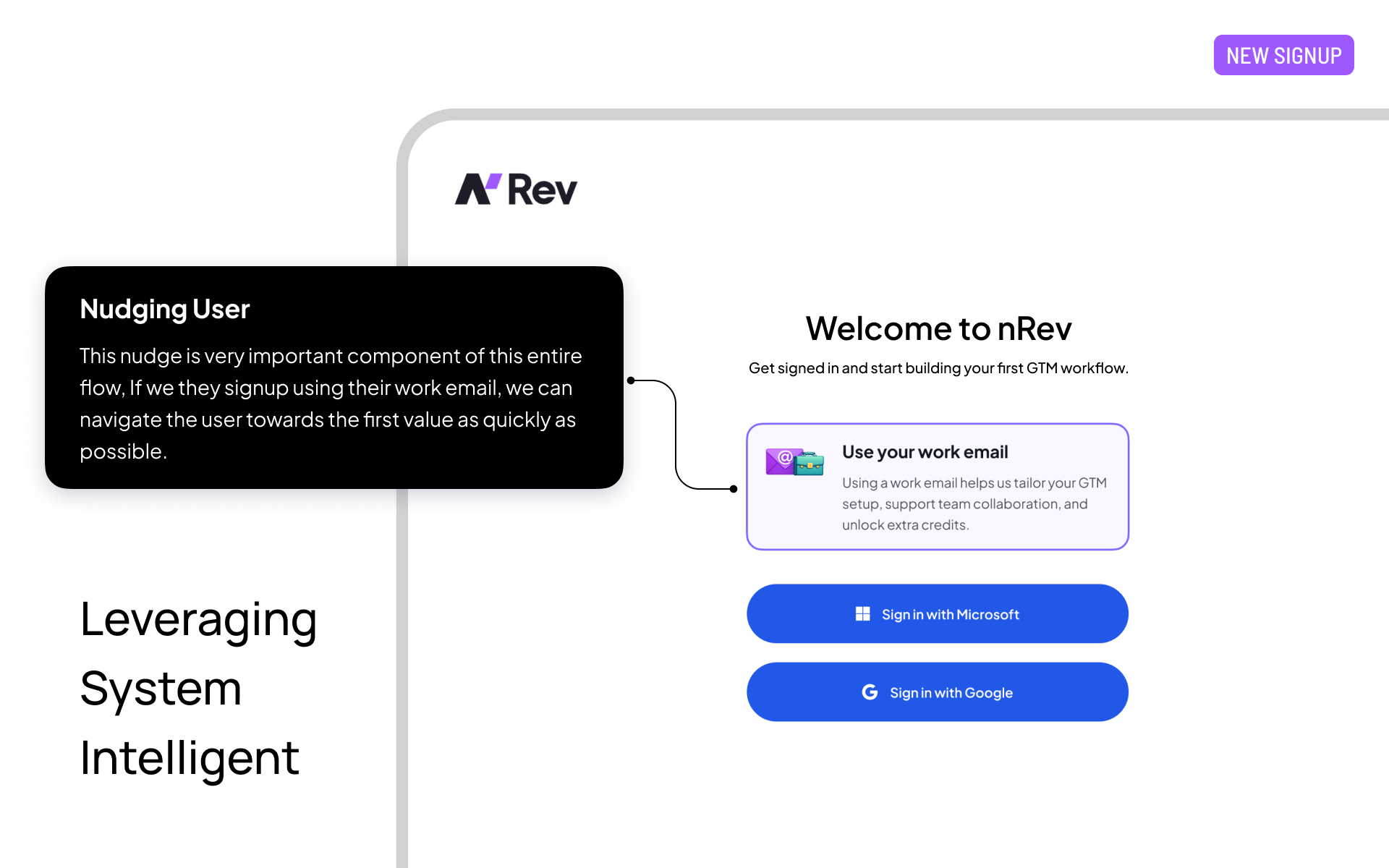
The product was not leveraging available user context to make onboarding relevant and actionable.
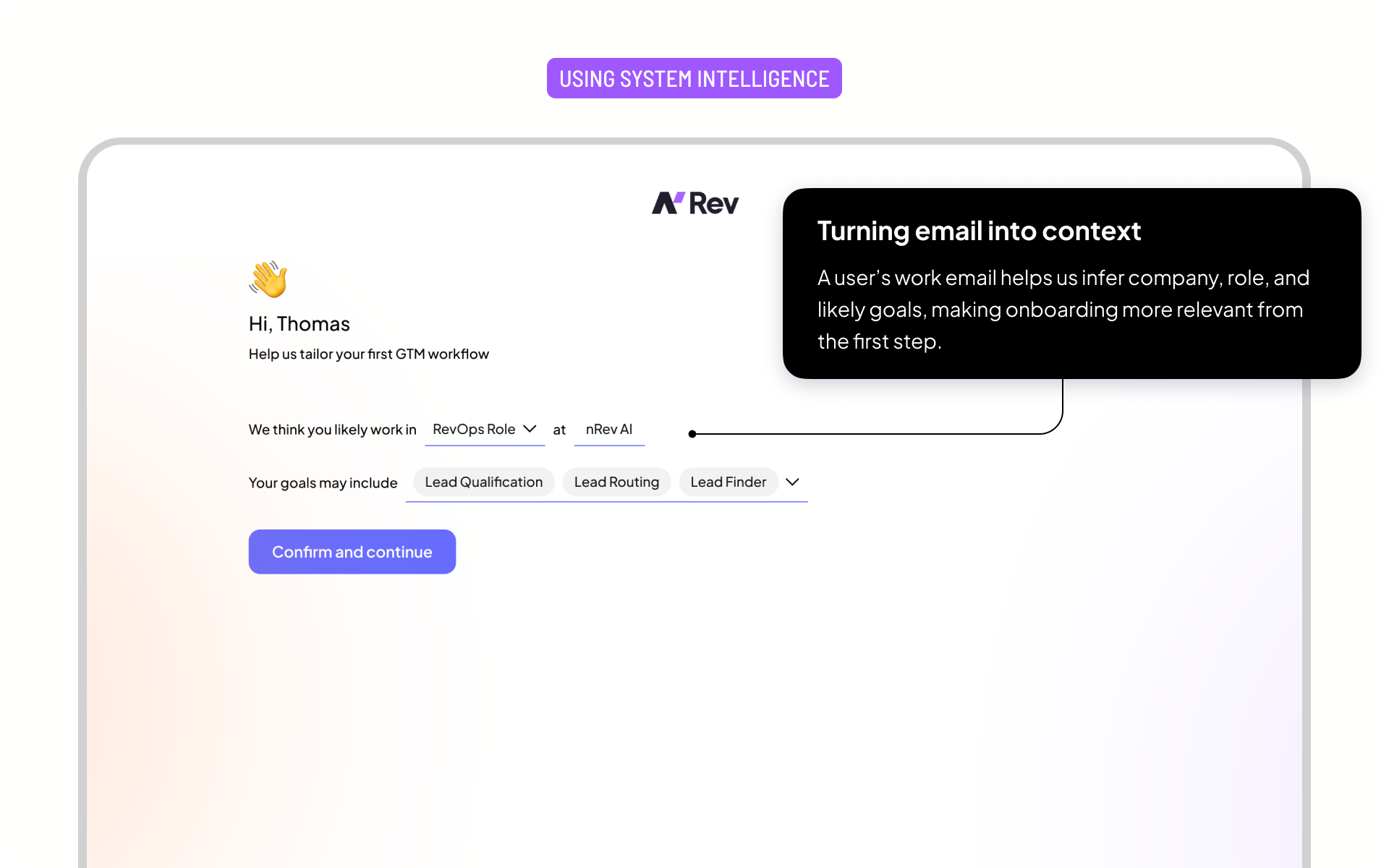
By capturing a user’s work email, we could infer role, company, likely goals, and relevant workflows.
However, the existing flow did not nudge users to provide this input, missing a key opportunity to personalize the experience.
Design Approach
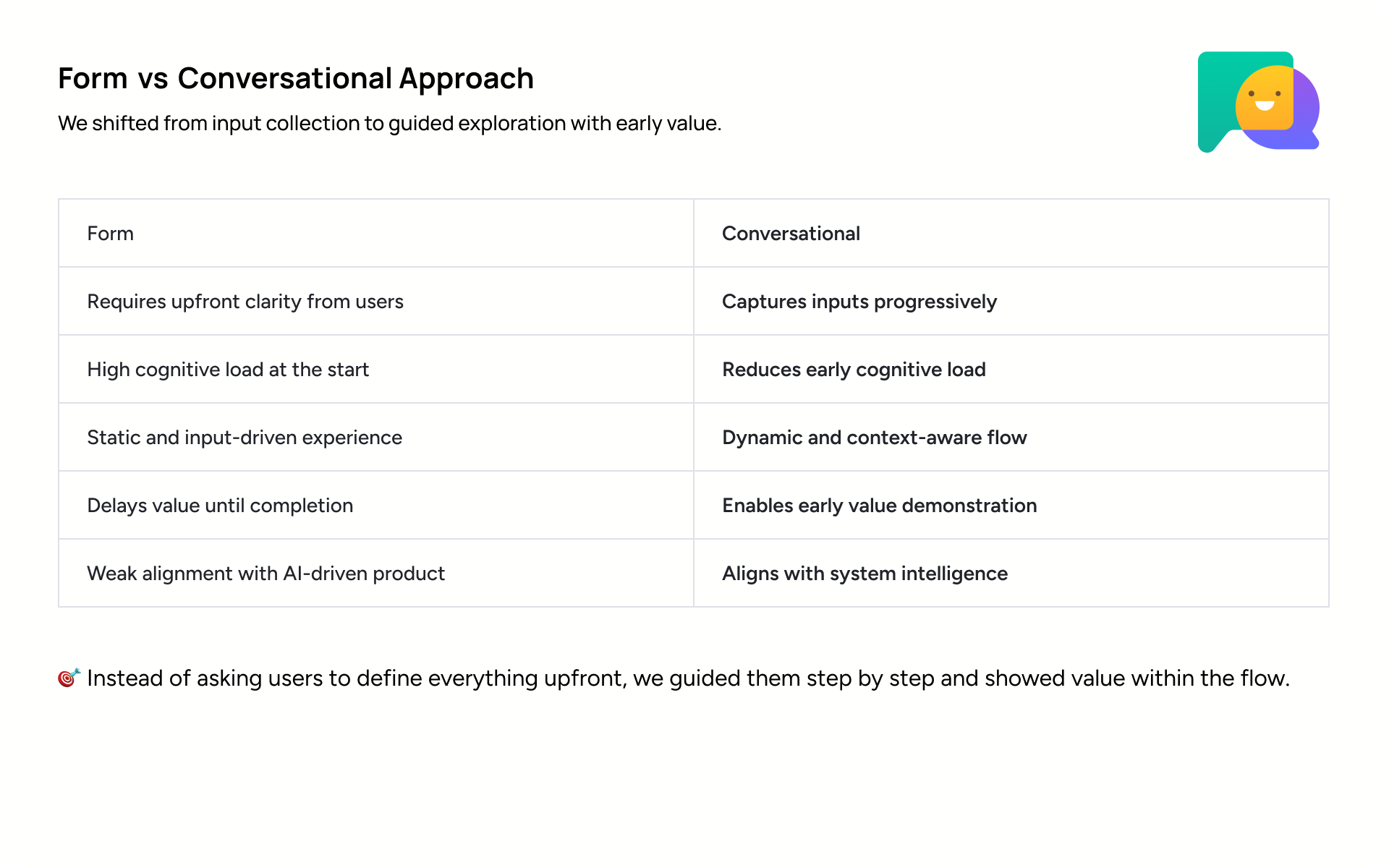
We approached this as a system design problem rather than just a UI problem, using available user context to make onboarding more relevant from the first step.
We created a structured onboarding framework:
Design Principles
Reduce ambiguity early: Guide users from intent to action
Show value before effort: Let users experience outcomes before asking them to build
Shorten time to first value: Help users achieve meaningful output quickly
Final Solution
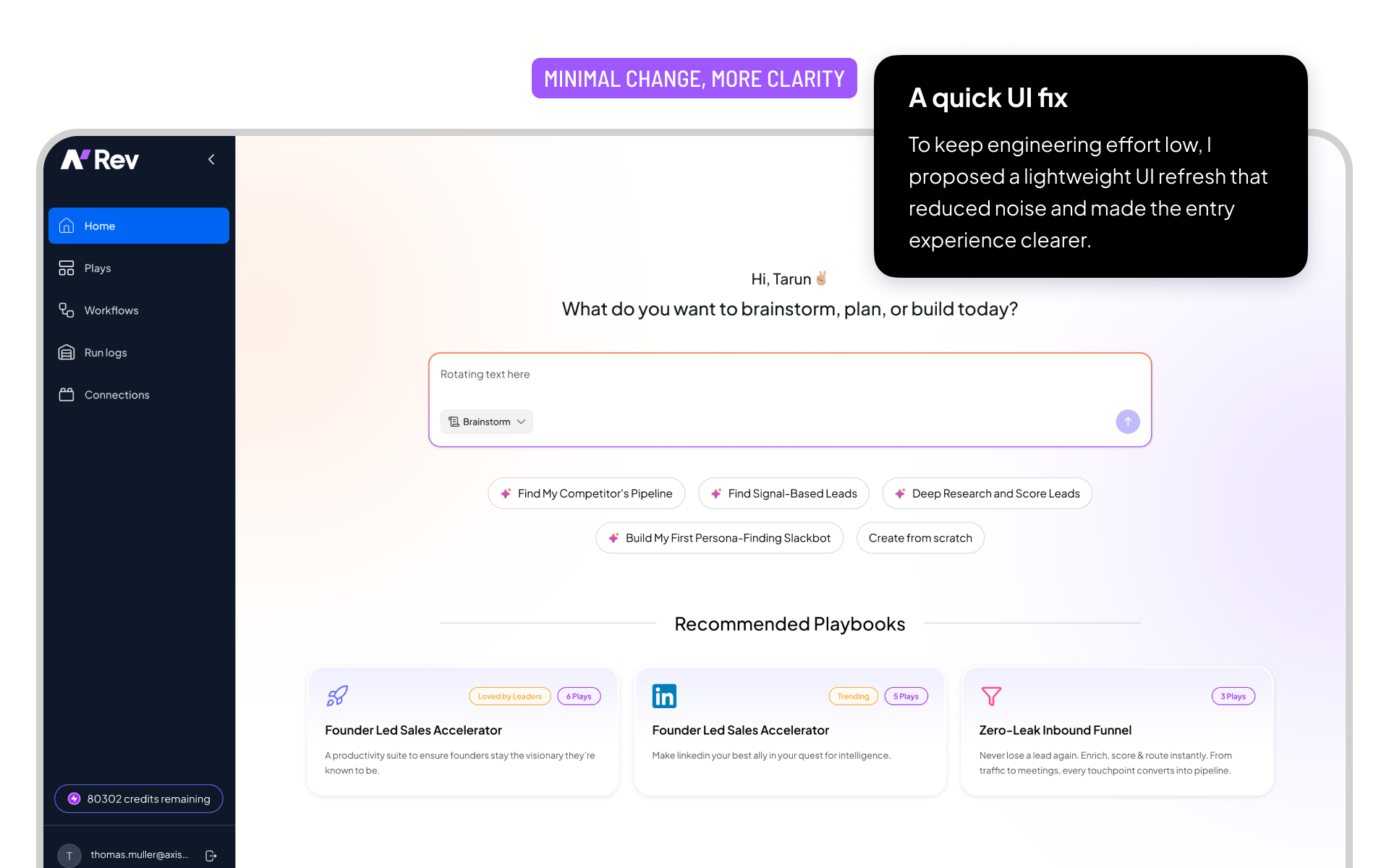
We introduced a structured onboarding layer to replace the generic homepage entry.
Role-based entry point
- We encouraged users to sign up using their work email
- This allowed the system to infer user context such as role, company, and likely goals
- Reduced friction in asking multiple questions
- Enabled smarter personalization
- Improved relevance from the first step
Goal and use-case selection
- Users were guided to define what they wanted to achieve
- Instead of generic questions, we framed it around outcomes like lead qualification, lead routing, and lead discovery
- Reduced ambiguity
- Aligned onboarding with user intent
- Improved clarity on what to build
Guided vs flexible setup
- Users could choose how they wanted to start: AI-guided setup, template-based workflows, or manual exploration
- Supported different user preferences
- Reduced cognitive overload
- Increased confidence
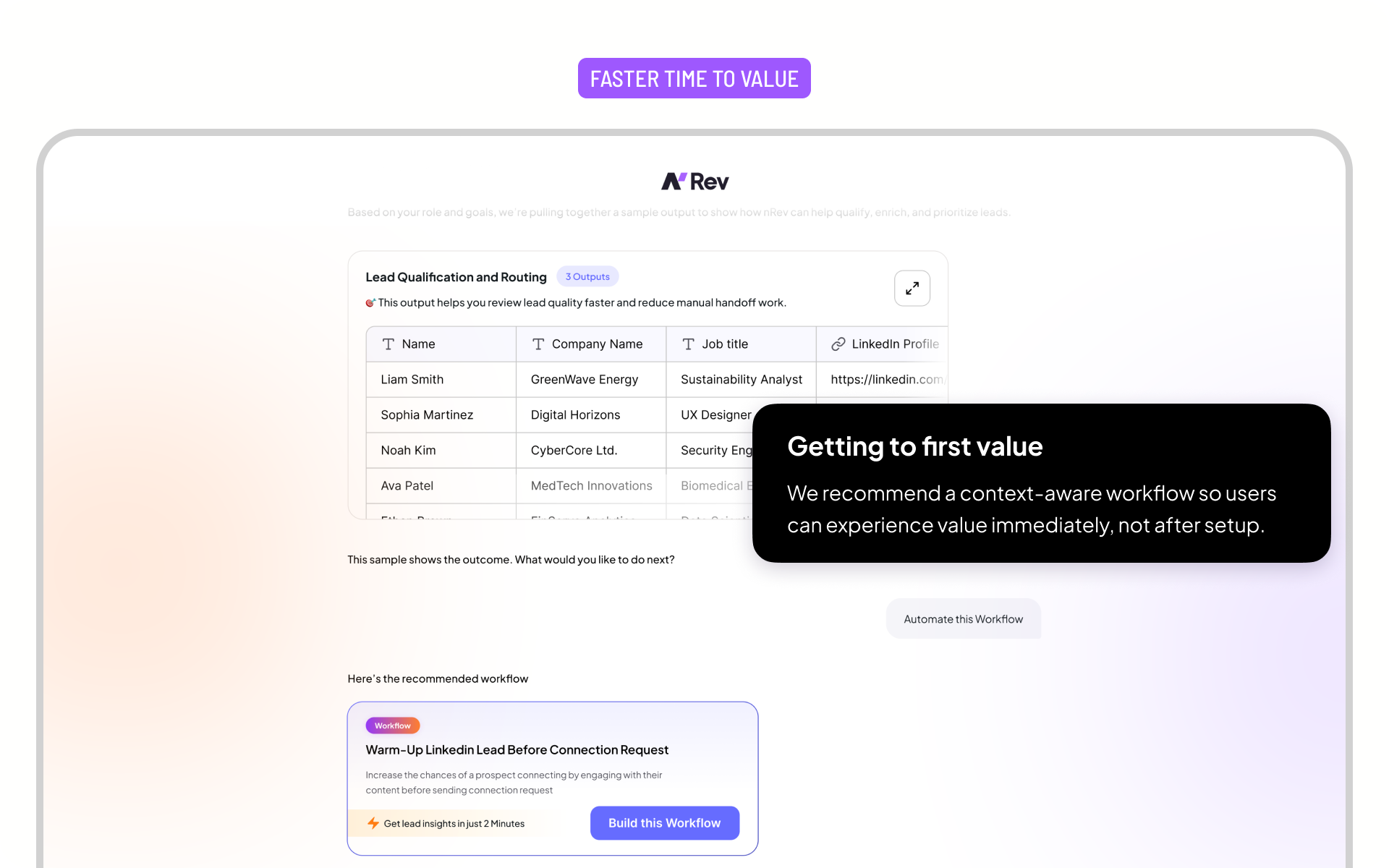
Context-aware activation
- Based on user inputs, we surfaced relevant workflows instead of a blank builder
- Users saw pre-built workflows, suggested starting points, and contextual recommendations
- Faster transition to action
- Reduced decision paralysis
Early value preview
- We introduced sample outputs and previews before users committed to building workflows
- Built trust
- Increased motivation
- Helped users understand product value
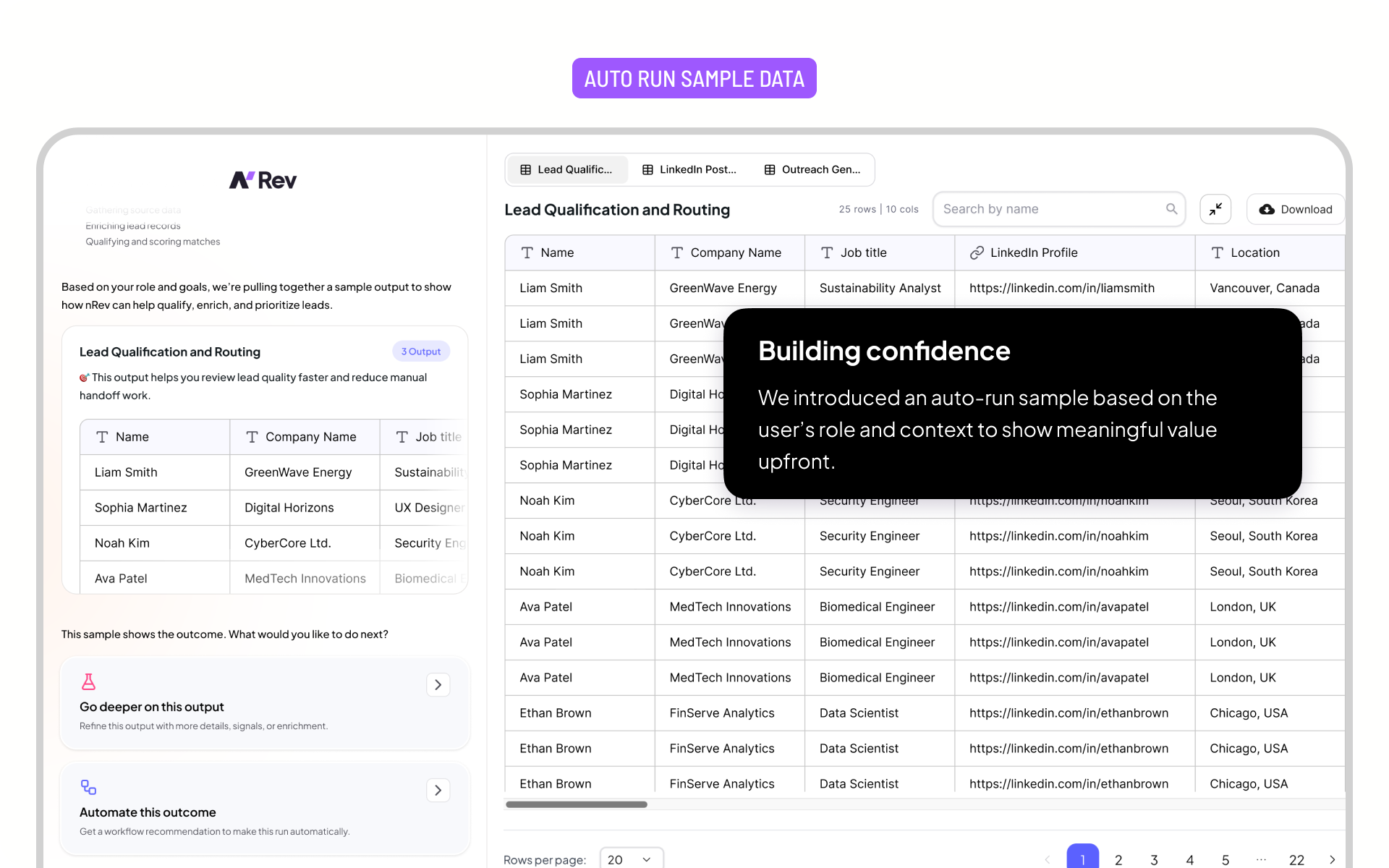
Instant value demonstration
- To build early trust and anticipation, we introduced an auto-run workflow based on the user’s role and context
- Instead of asking users to build from scratch, we generated a sample output immediately after onboarding
- For example, users could see enriched data such as leads derived from their LinkedIn activity, along with a clear explanation of how this output connects to their goals
- This acted as a free preview of the product’s capability
- Users were not just told what the product can do
- They experienced it instantly
- Built immediate trust in the system
- Reduced uncertainty about product value
- Increased confidence to proceed
- Improved transition from onboarding to action
Trade-offs
- We initially considered collecting tech stack data but removed it to reduce friction
- We prioritized faster activation over deeper personalization
- We limited inputs to only high-impact information
Outcome and Metrics
Since the experience launched recently, we want to validate its performance over a longer period. So far, early signals are trending ahead of our expected KPIs.
Conclusion
By introducing onboarding where none existed, we shifted the experience from confusion to clarity. The key was not just improving UI, but turning user context and intent into a more relevant onboarding experience. By combining guided onboarding with instant value demonstration, users were able to experience meaningful outcomes early, building trust and accelerating activation. Since the experience launched recently, we are continuing to validate performance over time. Early signals are encouraging and currently tracking ahead of our expected KPIs.